Tallinn presents itself with a quiet confidence. It does not try to impress through size or spectacle. Instead, it balances two identities that rarely coexist so naturally: a deeply preserved medieval city and one of the most digitally advanced societies in the world. This contrast defines Tallinn not as a postcard destination, but as a place shaped by continuity and adaptation.
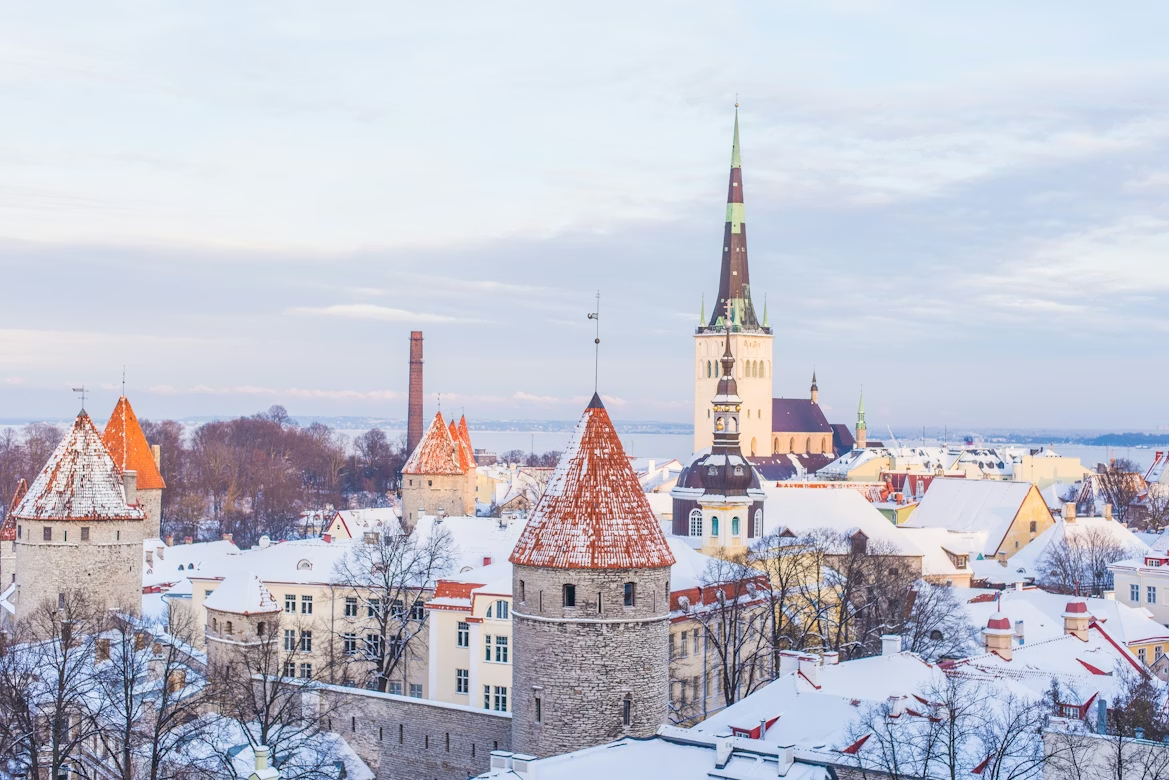
At first glance, the Old Town feels firmly rooted in the past. Cobblestone streets curve gently between limestone buildings. Church spires rise above red-tiled roofs. Defensive walls still trace the edges of the historic core. However, this is not a static heritage zone. People live here. Offices operate behind centuries-old facades. Cafés occupy former guild halls. Life continues without turning history into a performance.
Walking through Toompea in the morning reveals this balance clearly. Government buildings sit beside medieval houses. Locals cross small squares on their way to work. Meanwhile, viewpoints offer wide perspectives over the city, where old rooftops meet modern glass towers in the distance. The contrast feels calm rather than jarring. Tallinn allows its eras to coexist without forcing harmony.
Beyond the Old Town, the city shifts quickly. Kalamaja introduces a different rhythm. Wooden houses line quiet streets. Former factories now hold creative studios, tech offices, and bakeries. Street art appears without overwhelming the neighborhood. As a result, the area feels lived-in rather than rebranded. Young professionals, families, and long-term residents share the same spaces naturally.
At the same time, Tallinn’s digital infrastructure quietly shapes daily life. Free public Wi-Fi is widespread. Cashless payments dominate. Government services operate almost entirely online. For visitors, this efficiency removes friction. Transportation apps work reliably. Reservations remain simple. Communication feels smooth even without local language skills. Technology supports movement rather than distracting from place.
Despite this efficiency, Tallinn never feels rushed. The city remains compact. Distances stay walkable. Green spaces interrupt urban density. Kadriorg Park, for example, offers long tree-lined paths, quiet ponds, and open lawns near the coast. Nearby, the presidential palace and museums sit within a landscape designed for slowing down. Locals jog, read, and pause without urgency.
The sea shapes Tallinn’s atmosphere as well. Along the waterfront, paths connect harbors, parks, and modern developments. The Noblessner area blends restored industrial buildings with galleries and restaurants. Meanwhile, ferries move steadily toward Helsinki, reinforcing Tallinn’s role as a crossroads rather than an endpoint. Watching ships arrive and depart adds a subtle sense of movement without chaos.
Food culture reflects Estonia’s understated approach. Menus favor seasonal ingredients and simple preparation. Rye bread, root vegetables, forest mushrooms, and fresh fish appear frequently. Many restaurants focus on clarity rather than complexity. Portions feel balanced. Presentation stays restrained. As a result, meals feel grounded and honest rather than performative.
Cafés play a central role in daily routines. Small spaces open early and close without spectacle. People meet briefly, work quietly, or sit alone with intention. Conversation stays soft. Even popular spots avoid becoming loud. This café culture supports reflection rather than productivity theater.
Cultural life in Tallinn unfolds subtly. Museums emphasize context over scale. The Kumu Art Museum, for instance, combines modern architecture with thoughtful curation of Estonian art and history. Elsewhere, small galleries and performance spaces host local creators without heavy promotion. Events feel integrated into the city rather than imposed upon it.
Seasonality influences experience significantly. Summer brings long daylight and outdoor dining. Winter shortens days and deepens quiet. Snow softens edges. Streets glow under warm lights. Instead of slowing tourism completely, colder months reveal a more intimate Tallinn. Locals reclaim spaces. Silence becomes part of the appeal.
Accommodation choices mirror the city’s character. Boutique hotels favor restored buildings and minimalist design. Apartments emphasize function and light. Luxury exists, but it remains discreet. Comfort never competes with context. Windows frame rooftops, courtyards, or trees rather than spectacle.
What defines Tallinn most is emotional ease. Visitors rarely feel overwhelmed. The city does not demand constant attention. Instead, it rewards observation. Movement becomes intuitive. Pauses feel natural. Even first-time visitors quickly adjust to the rhythm.
Tallinn works well for travelers who value balance. It offers history without heaviness. Technology without noise. Culture without exhaustion. Rather than delivering moments designed for sharing, it provides conditions for presence. The medieval walls remain strong. The digital systems remain invisible. Between them, everyday life continues calmly.
In this way, Tallinn succeeds not by reinventing itself, but by allowing its layers to remain visible. Digital life meets medieval calm not as a slogan, but as a lived reality.