Sarajevo reveals itself through layers rather than landmarks. The city does not present a single narrative. Instead, it unfolds slowly, shaped by empires, faiths, conflicts, and everyday resilience. Walking through Sarajevo feels less like moving across space and more like moving through time, where centuries overlap within a few streets.
The city’s geography sets the tone immediately. Sarajevo rests in a narrow valley, surrounded by mountains that feel close and watchful. As a result, light enters the city at sharp angles. Mornings arrive softly. Afternoons feel enclosed. Meanwhile, the Miljacka River traces a modest line through the center, quietly anchoring daily life. Rather than dominating the landscape, the river supports it, guiding movement and gathering neighborhoods along its banks.
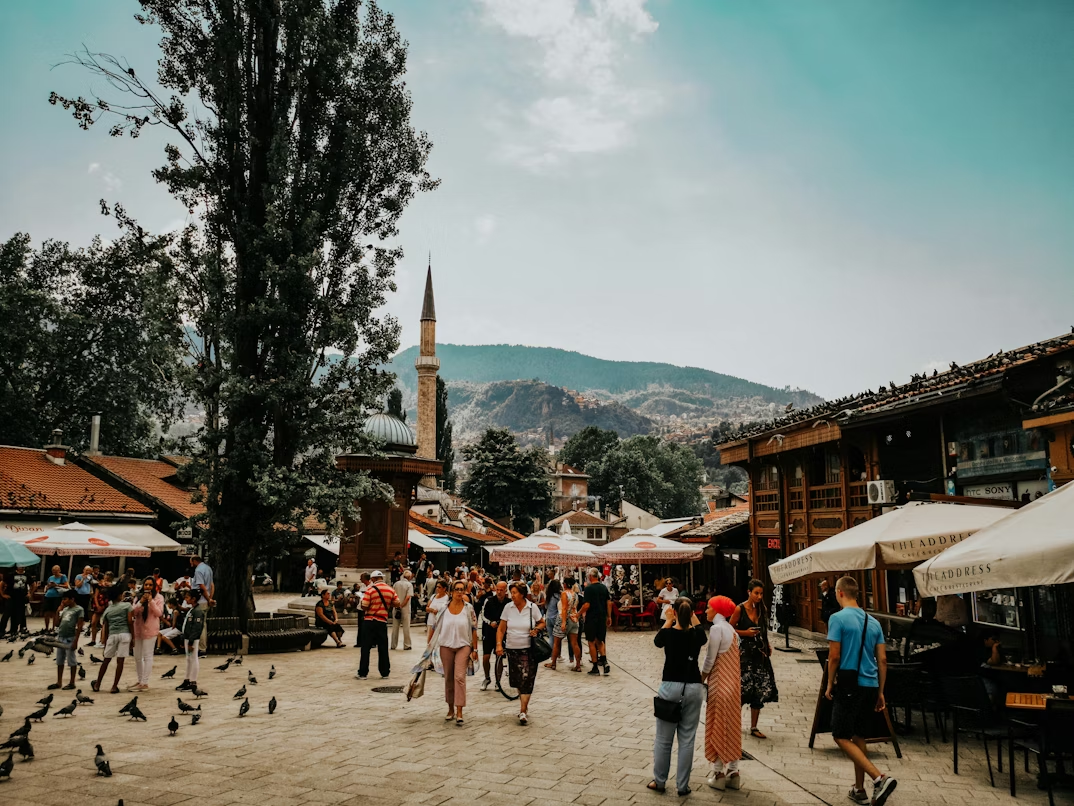
Baščaršija forms the emotional heart of Sarajevo. Here, cobbled streets lead past copper workshops, bakeries, and cafés that have changed little in generations. The call to prayer rises gently from minarets, while church bells answer from nearby hills. Because different faiths coexist within such close distance, sound becomes a defining feature of the city. As you walk, these layers blend naturally rather than compete.
Coffee culture reveals Sarajevo’s social rhythm. People do not rush through drinks. Instead, cups arrive slowly, served with sugar cubes and conversation. Friends sit for hours without urgency. Even business discussions pause for shared silence. Through this ritual, visitors learn an important lesson: time in Sarajevo is not measured by productivity but by presence.
Moving beyond the old quarter, the city shifts again. Austro-Hungarian architecture lines wider streets, introducing orderly façades and formal squares. Buildings feel heavier here, both visually and historically. Yet cafés remain lively, and trams continue to glide past without interruption. This contrast shows how Sarajevo absorbed outside influence while maintaining its own pace.
History becomes unavoidable, yet never staged. Bullet marks remain visible on walls. Memorials appear unexpectedly beside playgrounds and apartment blocks. Rather than isolating the past, Sarajevo integrates it into daily life. Children play nearby. Locals pass without ceremony. Memory exists, but it does not freeze the city.
Climbing toward the surrounding hills offers perspective. From viewpoints above the city, rooftops cluster tightly below, interrupted by minarets and church spires. From here, Sarajevo appears fragile and strong at the same time. The mountains that once isolated and protected the city now provide quiet escape, with walking paths and forest air just minutes away.
Food reflects the same layering. Ottoman-influenced dishes sit beside Central European pastries. A single meal might include ćevapi served with flatbread, followed by rich cakes and strong coffee. Portions remain generous. Presentation stays simple. Flavor carries the story rather than decoration.
What defines Sarajevo is not tragedy alone, despite its history. Instead, it is continuity. Life persists without spectacle. Humor survives. Hospitality feels sincere rather than performative. Visitors are welcomed into conversation, not processed as tourists.
Sarajevo does not ask to be understood quickly. It rewards those willing to walk slowly, listen carefully, and sit without agenda. In doing so, the city offers something increasingly rare: a destination shaped not by reinvention, but by remembrance, coexistence, and quiet endurance.