Tbilisi reveals itself through curiosity rather than spectacle. The city does not organize its stories neatly. Instead, it layers them openly, allowing old and new, sacred and casual, refined and improvised to coexist without apology. For travelers who enjoy wandering, observing, and asking quiet questions, Tbilisi feels immediately engaging.
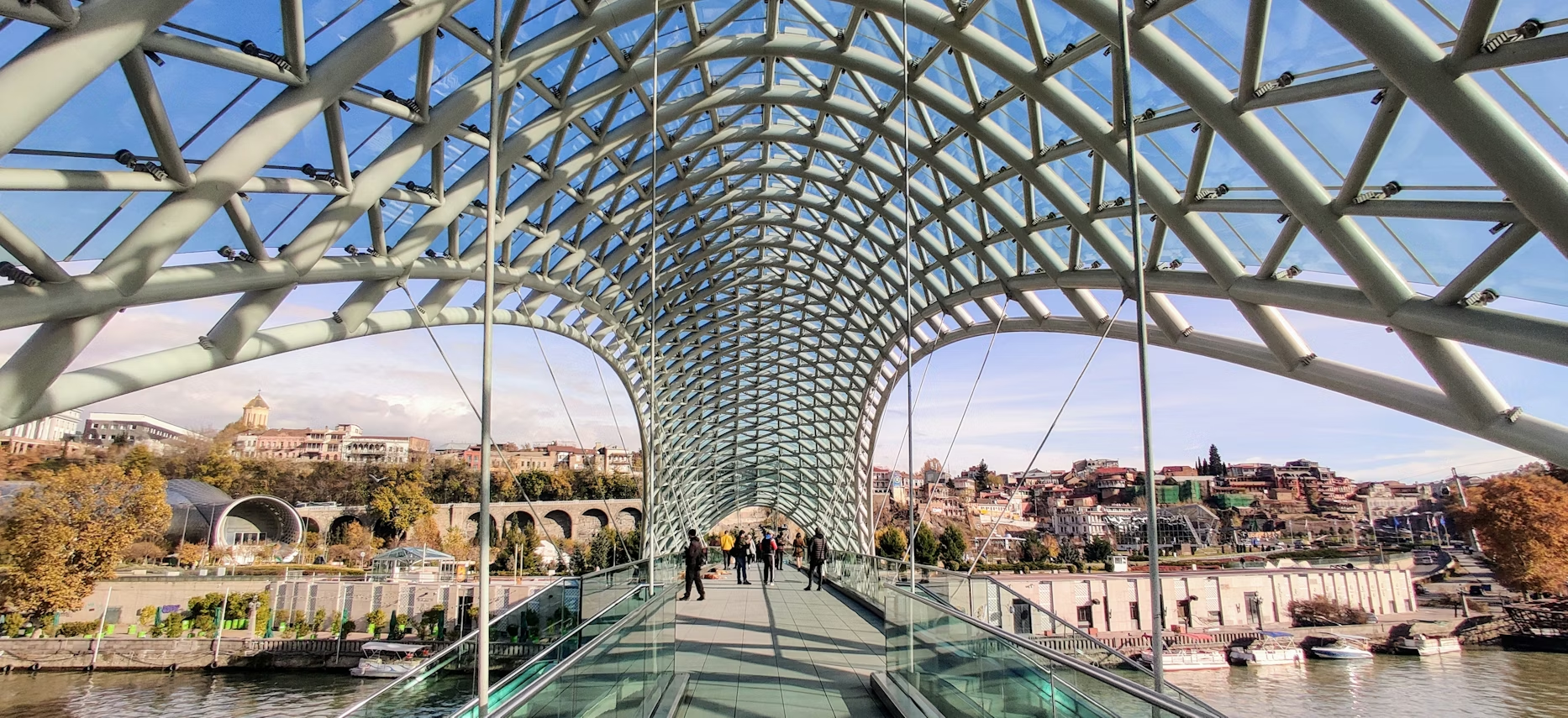
The first impression often comes from contrast. Historic balconies lean over narrow streets, their wooden frames worn smooth by time. Just beyond them, modern cafés glow with soft light and experimental menus. Sidewalks shift from polished stone to uneven pavement within a single block. Rather than feeling chaotic, this inconsistency feels human. The city shows its seams, and that honesty becomes part of its appeal.
Old Tbilisi forms the emotional center. Walking through districts like Abanotubani, the air carries warmth from sulfur baths hidden behind brick domes. Steam escapes through small openings, especially in the early morning. Locals pass without pause, treating centuries-old traditions as ordinary routine. Churches, mosques, and synagogues sit within short walking distance, reflecting a history shaped by movement, trade, and coexistence. Bells ring softly. Calls to prayer echo gently. Daily life continues between them.
Climbing upward changes perspective. From paths leading toward Narikala Fortress, rooftops spread across the valley in soft layers of red and gray. The Kura River curves quietly below, dividing neighborhoods without separating them. At sunset, the city’s colors deepen rather than fade. Light settles on stone walls and tiled roofs, giving Tbilisi a calm presence that feels reflective instead of dramatic.
Food becomes a language of curiosity. Meals arrive generously, meant to be shared. Khachapuri stretches with melted cheese. Khinkali release hot broth with each careful bite. Tables fill quickly, often with strangers who become temporary companions. Toasts follow one another, led by whoever feels inspired in the moment. Wine flows easily, not as luxury but as tradition. In Georgia, wine carries memory, and Tbilisi treats it as conversation rather than ceremony.
Coffee culture adds another layer. Small cafés occupy former apartments, basements, and courtyards. Some feel intentionally designed. Others appear almost accidental. Baristas talk openly about beans, music, and neighborhood changes. Time slows naturally in these spaces. Laptops open briefly, then close. Observation replaces productivity.
Movement through the city remains intuitive. Buses and metro lines connect outer districts, yet walking remains the best way to understand scale. Short climbs reveal sudden views. Quiet staircases lead to shared courtyards. Cats nap on warm cars. Children play football between parked vehicles. The city feels lived in rather than arranged.
Creative energy pulses gently. Galleries appear behind unmarked doors. Designers reuse Soviet-era spaces without erasing their past. Music drifts from rehearsal rooms late into the evening. Tbilisi does not separate culture from daily life. It allows them to overlap freely.
Nature stays close. Hills rise quickly beyond the city center. Even within urban areas, trees line streets generously. Fresh air moves easily through open windows. Day trips into surrounding wine regions or mountain roads feel accessible, yet returning to the city always feels grounding rather than limiting.
What makes Tbilisi special for curious travelers is its openness. The city does not perform. It invites. It allows questions without demanding conclusions. History is present but not polished. Modern life is visible but not dominant. Between these layers, travelers find space to reflect, connect, and wander without agenda.
Tbilisi rewards attention. It offers texture instead of perfection. For those willing to move slowly and look closely, the city becomes less about landmarks and more about moments. In that quiet accumulation, curiosity turns into connection.