The Sahara is unlike any other landscape. Endless sand stretches to the horizon, shaped by wind, sun, and time. Therefore, traveling here requires slowing down, surrendering schedules, and embracing the desert’s rhythm. Moreover, glamping provides the rare balance: comfort without taking you away from the raw, open spaces.
Arrival often feels unreal. As the 4×4 pulls away from the nearest village, the dunes rise gradually. Shadows stretch across the rippled sand. The vehicle pauses to allow the eyes to adjust. Wind brushes against your face, carrying hints of dry earth and distant herbs. Meanwhile, the desert doesn’t rush, and neither should you.
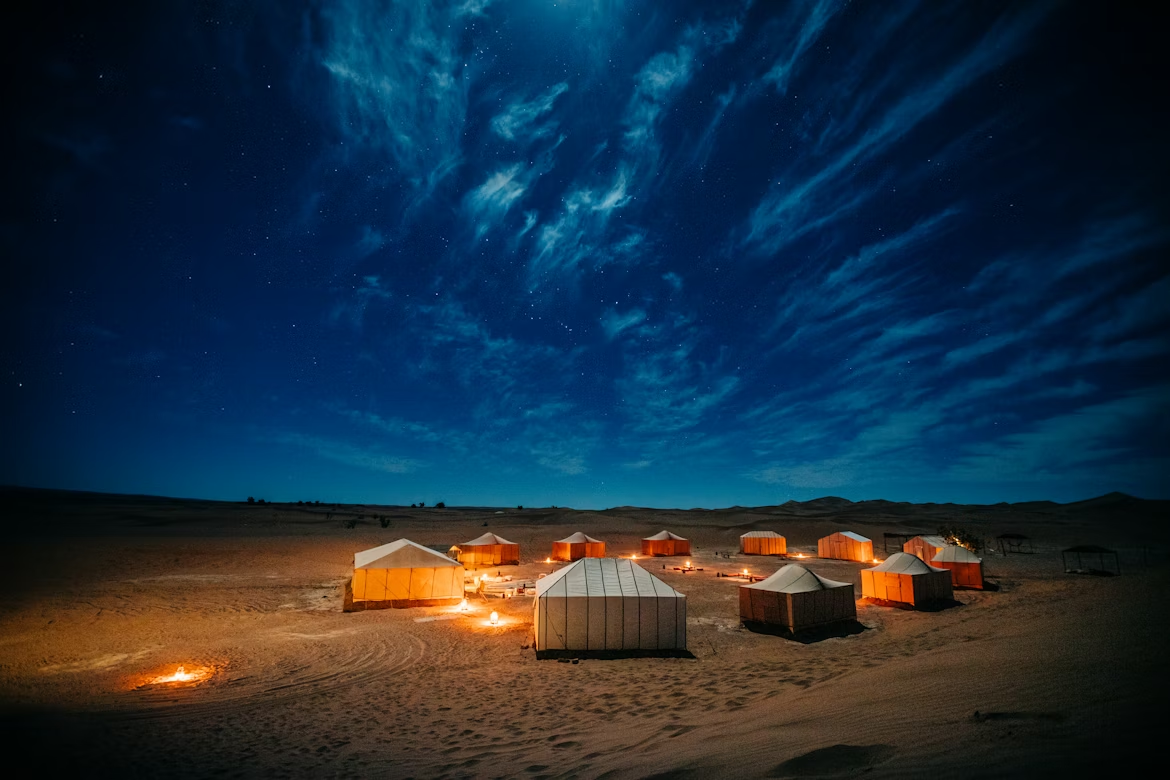
Setting up camp is part of the ritual. Canvas tents appear, modest yet elegant, perched atop soft dunes. Inside, beds are draped in fine linens. Lanterns glow warmly at night, casting gentle light across rugs patterned in local motifs. Yet, it is outside where the magic truly begins. As the sun dips, the dunes transform from pale gold to deep amber, and the horizon becomes a slow-moving painting. Additionally, the changing light highlights textures invisible at midday.
Evenings in the Sahara unfold in layers. After a simple dinner—tagine simmered slowly over coals, fresh bread, and sweet mint tea—guests gather around the fire. Conversation fades quickly, while silence grows, punctuated only by the occasional call of a desert fox or the hiss of wind over sand. Then, looking up, the sky is a vast canvas of stars. The Milky Way stretches in sharp contrast, and shooting stars appear with startling frequency. In that quiet, the desert teaches patience and perspective.
Morning brings a different palette. Dawn light softens the dunes, creating curves and textures invisible in midday glare. Camel caravans move slowly along ridges, their silhouettes merging with the horizon. For some, walking barefoot on the warm sand becomes a meditative practice. Each step sinks slightly, reminding you of the desert’s depth and scale. At the same time, the quiet invites reflection on how small human presence feels in such vastness.
Glamping excursions often include guided adventures. Sandboarding down steep dunes delivers brief bursts of thrill, while short hikes introduce hidden oases or rare desert flora. Bedouin guides share stories—some ancient, some personal—connecting visitors to a culture shaped entirely by the desert. Similarly, these narratives feel integral rather than performative, grounding the experience in human presence without disturbing the vast silence.
Afternoons are for stillness. Hammocks are strung between tents or palm clusters. Reading, napping, or simply watching the slow movement of light across dunes becomes an activity in itself. Unlike cities, the desert does not demand distraction. Instead, it rewards awareness. Even small moments—wind brushing across your skin, sand shifting beneath your feet—gain amplified significance. Furthermore, these pauses teach a rhythm rarely experienced in urban life.
Glamping in the Sahara is ultimately about contrasts. Comfort exists without diminishing wildness. Firelight and linens coexist with unbroken silence and vast openness. Starry skies stretch endlessly while cozy tents provide human-scale refuge. Movement alternates with stillness. Eventually, each night, the desert reinforces its lessons: presence, humility, and wonder.
By the time departure comes, the dunes leave a lasting imprint. The vastness remains in memory, and so do moments of quiet reflection, laughter around the campfire, and the sheer beauty of uninterrupted sky. Unlike conventional travel, glamping in the Sahara leaves you changed—not by luxury, but by the desert’s scale, patience, and silence. Moreover, the experience lingers long after returning to everyday life.