Long before Salar de Uyuni became a destination, it was part of a living landscape shaped by water, belief, and survival. According to Andean tradition, this vast white expanse was once a great lake. When it disappeared, it did not vanish without meaning. The land was transformed, not emptied.
Local stories speak of Pachamama, the Earth Mother. She is not a metaphor here. She is presence. The salt flat is considered part of her body, formed through patience rather than force. This belief still influences how people move across Uyuni today. Guides will quietly offer a small gesture before entering the flats. A pause. A moment. Sometimes a simple acknowledgment of the land beneath the tires.
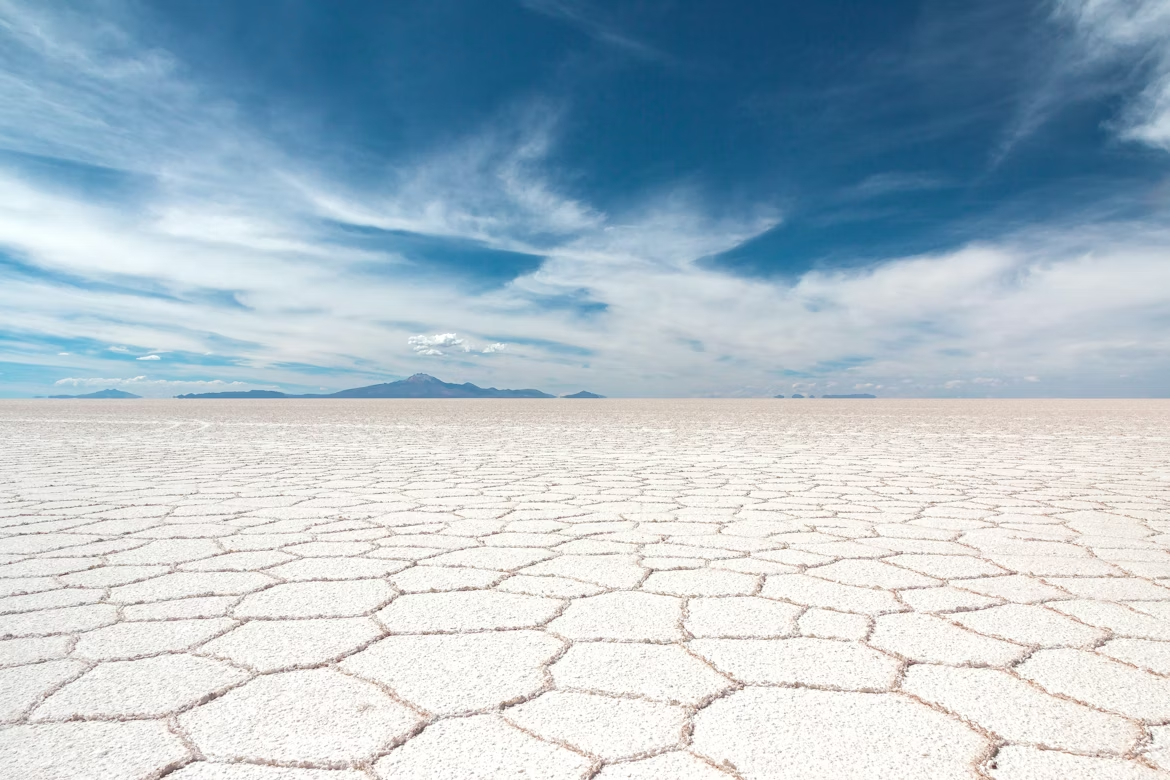
Geology confirms what tradition remembers. Uyuni was formed from ancient lakes that evaporated thousands of years ago. What remains is a salt crust several meters thick. Underneath it lies brine rich in minerals. The surface may look fragile, but it holds weight. It carries memory.
At over 3,600 meters above sea level, the air changes behavior. Breathing becomes deliberate. Movement slows. The body adjusts whether it wants to or not. Locals believe this slowing is intentional. Uyuni is not meant to be crossed quickly. It teaches restraint through altitude.
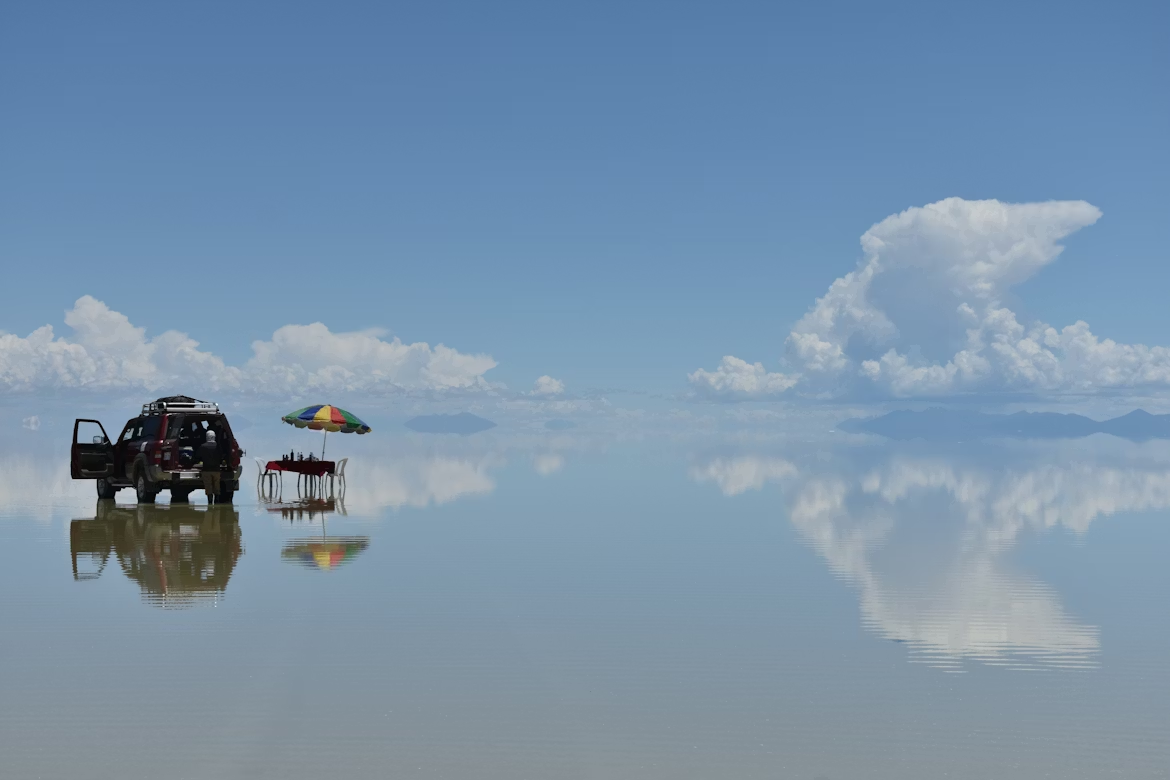
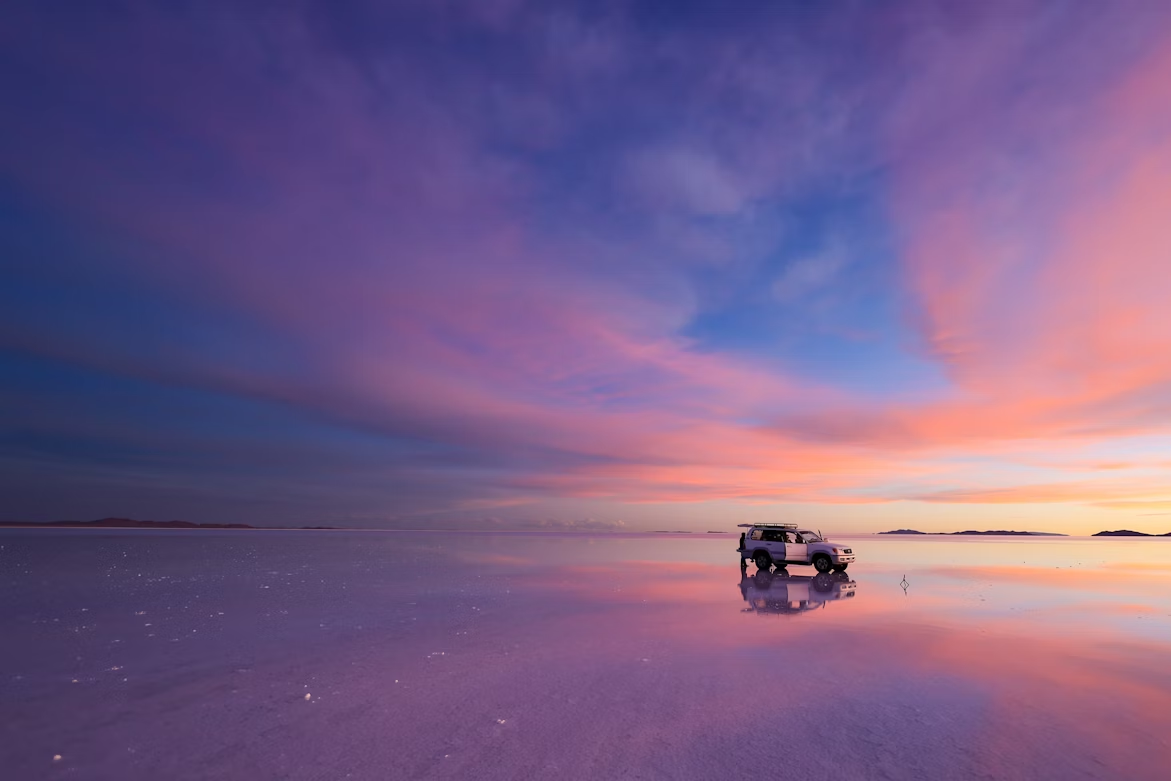
During the rainy season, a thin layer of water settles across the salt. The surface becomes a mirror. For visitors, this feels unreal. For locals, it is familiar. Elders in nearby villages have long read the water like a calendar. Too much reflection means delays. Too little means dry harvests ahead. The mirror is beautiful, but it is also information.
Stories circulate among drivers who have spent decades navigating the flats. One tale often repeated is about travelers who insisted on chasing reflections as a storm approached. Rain erased tracks. The horizon dissolved. Sky and ground became identical. The group waited inside their vehicle for hours. No panic. Just stillness. Uyuni does not respond to urgency. It responds to patience.
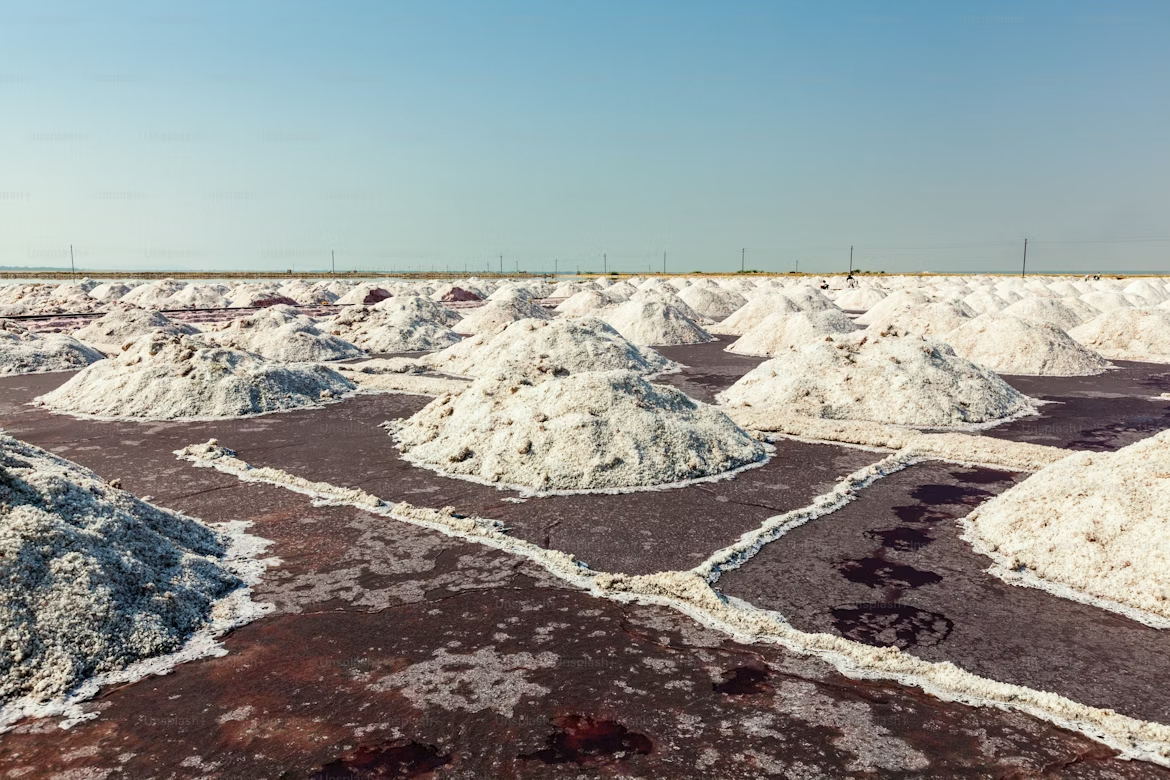
Salt harvesting remains part of daily life. Families cut blocks from the ground and stack them under the sun. The work is slow. Children grow up learning how weather changes the surface. They know when the salt is ready. They know when to wait. For them, the flat is not abstract or surreal. It is a provider.
As daylight fades, temperature drops sharply. Salt releases no warmth. Night arrives without warning. Under clear skies, the stars appear dense and close. Reflections sometimes return after dark, doubling constellations across the surface. In Andean belief, the sky and the earth are connected. Uyuni makes that connection visible.
Many travelers stay in hotels built from salt itself. Walls, beds, and tables carry the mineral scent of the land. The design is simple. The comfort is quiet. Nothing distracts from the landscape outside. Luxury feels unnecessary here. Shelter is enough.
Uyuni does not change quickly. Its palette remains restrained. White, blue, gray. What shifts is perception. The land does not perform. It waits. It reflects not only clouds, but intention. Those who arrive seeking spectacle leave with photographs. Those who arrive with patience leave altered.
Between sky and earth, the salt flat holds its position. It does not ask to be understood. It asks to be respected. In that stillness, Salar de Uyuni becomes more than a place. It becomes a reminder that some landscapes are not meant to be consumed, only encountered.