The first morning in Georgia’s Caucasus Mountains felt almost sacred. Mist hung low over jagged peaks, and the scent of pine mixed with the crispness of snow-melt streams. As a result, I tightened the straps on my backpack and stepped onto a trail that wound upward, stone by stone, past abandoned shepherd huts and terraced fields that had supported local families for generations. The mountains here are more than geography—they are history etched into rock and soil.
Villages appeared like mirages on distant slopes. In Mestia, I watched elders carrying firewood along narrow paths, their woolen hats and hand-stitched coats telling stories of centuries-old traditions. Meanwhile, a few children ran alongside the trail, laughing and calling greetings I couldn’t fully understand. Locals spoke of the mountains as living entities, guarding their families and shaping their lives. My guide explained that each valley has its own patron saint, celebrated with festivals that mix Orthodox Christian rituals and older pagan customs. Even now, small chapels perched on cliffs host prayers for safe passage through snow and storms.
Hiking in the Caucasus is about rhythm, not speed. The trail shifted constantly—from rocky scree to grassy slopes, from shaded forests to exposed ridges where the wind could knock a hat off in seconds. Streams carved silver threads through mossy boulders. Often, I stopped not just to catch my breath, but to notice the way sunlight fractured through clouds, creating transient patterns on the mountainside. A faint ring of smoke in a distant village reminded me people lived here in harmony with these peaks, not despite them.
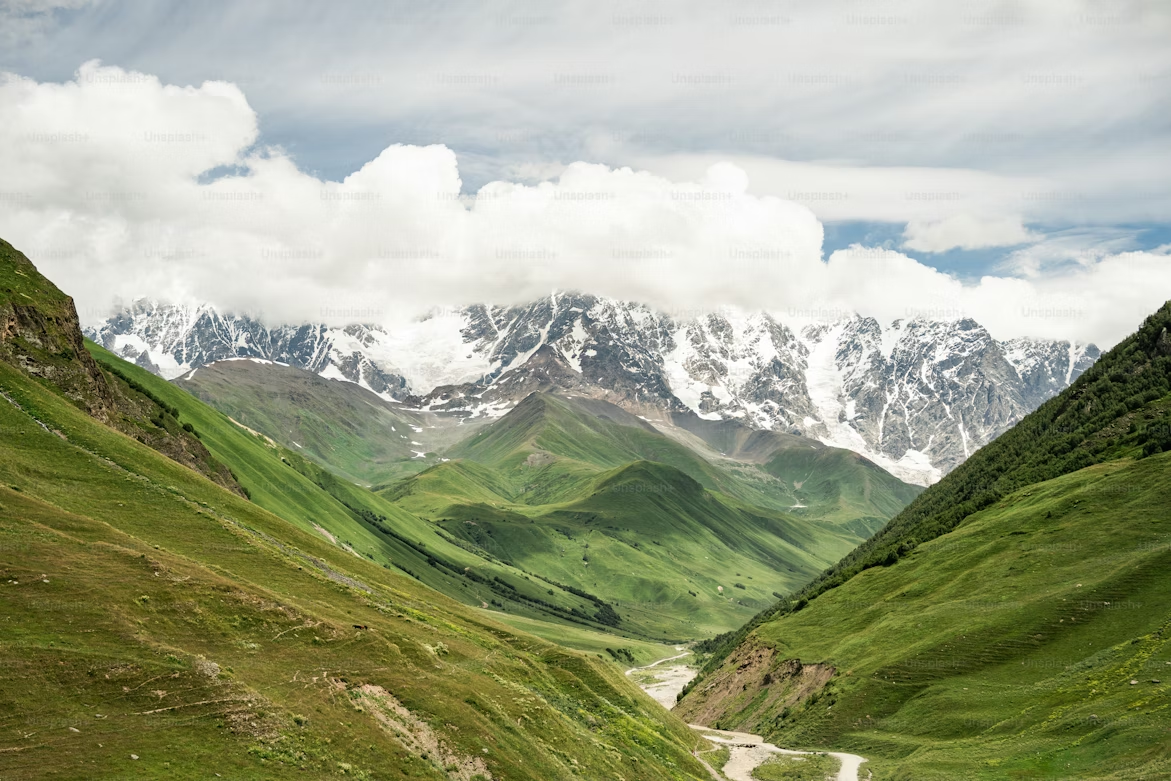
By midday, I reached a high plateau overlooking the Ushguli region. The landscape unfolded in layers: snow-capped peaks in the distance, green valleys below dotted with stone towers, and shepherds’ tents with smoke curling skyward. I sat on a boulder, sharing bread and cheese with my guide, while he recounted local legends. For instance, one story described a giant named Amirani, chained to the mountains for challenging the gods, his struggles mirrored in the peaks’ jagged edges. Each rock face and cliff seemed alive with that narrative, the mountains holding the memory of human courage and folly alike.
Wildlife added subtle movement to the quiet. Occasionally, a herd of chamois appeared along a ridge, pausing to observe me before disappearing into the cliffs. Birds of prey circled above, their shadows gliding over the valley floor. In addition, even insects seemed deliberate here, each step measured against the slow pulse of the mountains. There were no signs, no fences—just nature moving at its own pace, and humans entering respectfully.
Evenings in the Caucasus transform the air entirely. Sunlight fades quickly, leaving gold and violet brushing mountain crests. When I arrived at a small guesthouse in a remote village, the scent of wood smoke reached my nose. Dinner was a communal affair: khachapuri oozed cheese onto wooden boards, fresh herbs seasoned the air, and local wine—a rich Saperavi—warmed the tongue. Conversation included little English, yet gestures, smiles, and shared food built immediate understanding. By the time I lay in bed on a wooden mattress, the peaks outside glowed under a crescent moon, and I felt small, quiet, and exactly where I was meant to be.
Hiking deeper into the Caucasus over the next days, I crossed glacial streams, climbed ridges above clouds, and slept in mountain lodges where goats wandered freely at dawn. Subsequently, every trail offered lessons in patience, humility, and observation. The mountains demanded attention to detail: a sudden change in cloud cover, the subtle path worn by shepherds’ boots, or the shape of a distant peak that signaled an approaching storm. GPS was less useful than listening, watching, and waiting.
By the end of the trek, I realized the Caucasus are not conquered—they are experienced. Villages, legends, streams, and peaks combine into an ecosystem of stories and sensations. Ultimately, travelers leave with sore legs, but also with hearts stretched wide by beauty and history. The memory of the Caucasus lingers not just as landscape, but as a slow, living presence.
Visiting Georgia’s mountains is an invitation to humility and curiosity. The air is thinner, the skies wider, and the stories older than most roads or guidebooks can convey. Therefore, hiking here is not just a journey—it is a dialogue between the human spirit and the enduring, immovable mountains that have watched over generations.